
Orange County Arrest Report Window
The county's Law and Justice directory lists an Arrest Log E-Service covering the past 30 days. You pick one date at a time. It lists both arrests and citations. That scope runs wider than the current-custody locator, which only shows who is in jail right now. The old Booking Log address now leads nowhere. OCSD routes Booking Log access through its authenticated Public Services Portal instead. Signing in is part of the process.
Treat the 30-day span as a rolling window, not evidence that older booking files were destroyed. The Sheriff's Blotter is a different animal altogether. It offers 7-day and 30-day incident views for unincorporated areas and sheriff-contract cities, while Anaheim, Santa Ana, and Irvine run their own police departments with their own records offices.
Read Orange County Arrest Reports
Begin with the event date, not a guess built on a name. Names repeat across the county. The multi-day search shines in three situations. An arrest may have landed before midnight, a citation may have skipped jail custody, or a release may have emptied the roster before anyone searched it.
- Open OCSD Online Services and follow the Booking Log route.
- Use the portal account screen if required, then choose the most likely day.
- Work backward one date at a time through the 30-day span.
- Match name and DOB, and save the booking number for a records request.
- Check the relevant city police log or Records office when the arresting agency was municipal.
For the newest bookings, use Arrested Today, which tracks the latest date and intake lag. Freshness is its whole job. Never read the crime map as proof of a booking. CrimeMapping reports incidents and activity. One incident can end with no arrest, a citation, or a later booking.
Orange County Arrest Entry Fields
The county keeps the fields narrow. Its public wording covers the basics and stops there. Charges, bail, arrest location, release outcome, and booking photos stay out of the web view. Government Code disclosure rules describe broader records that agencies may release, subject to exemptions, but each portal decides what it actually shows.
| Entry field | Use and caution |
|---|---|
| Booking number | Identifies the intake record, not the court case. |
| Name | Needs another identifier where names repeat. |
| Booking type | The published description does not define all values. |
| DOB | Date of birth helps distinguish people. |
| Photo | No photo field is confirmed. |
A charge pulled from the agency record is simply what booking recorded that day. It can change or vanish later. The disposition, meaning the court's final outcome, lives on the Orange County Superior Court path instead. The county's own wording sits in the official directory.
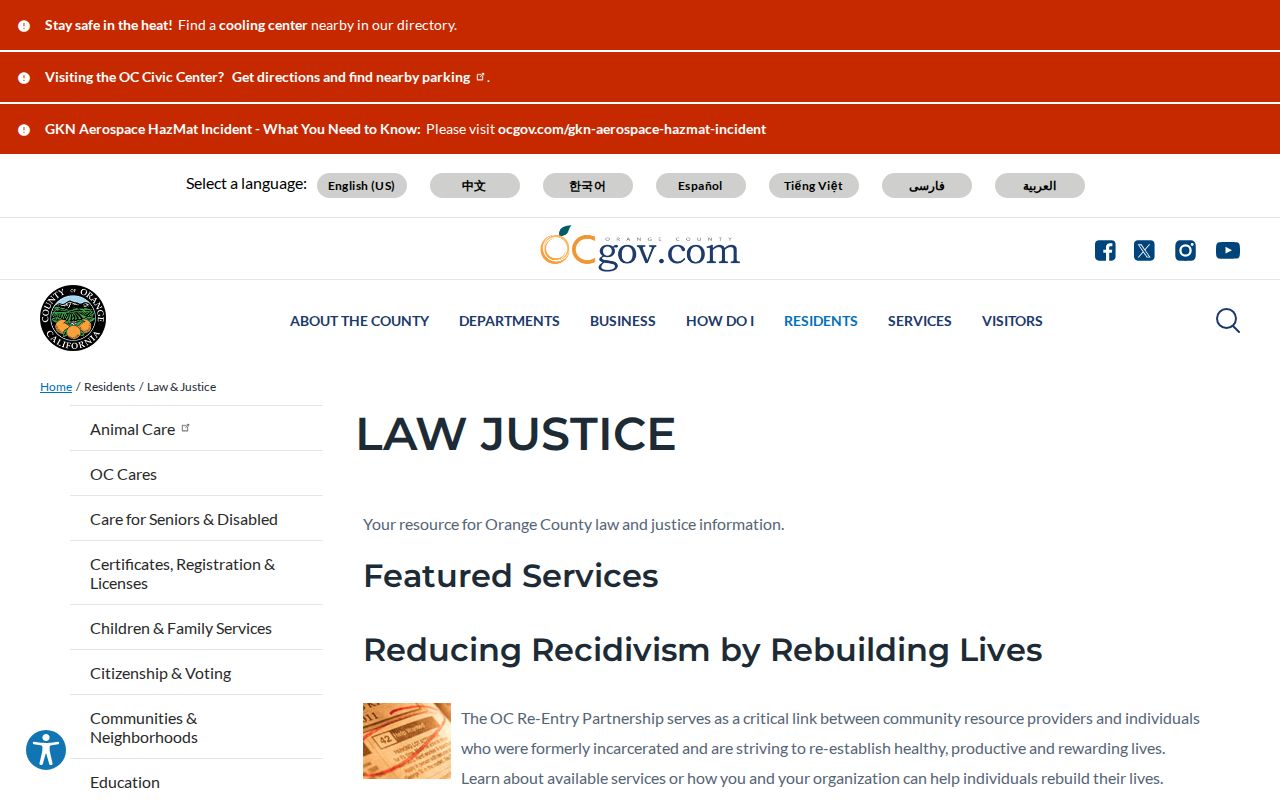
The source capture helps distinguish the date-based booking service from the activity map.
Orange County Blotter Is Different
The sheriff's blotter links out to CrimeMapping. Both 7-day and 30-day views exist. It tracks incident and activity data for OCSD areas, not a complete list of county jail bookings. Use it for events near a place or date. Custody and booking questions need the jail systems, while the CrimeMapping interface supplies the map and filter context.
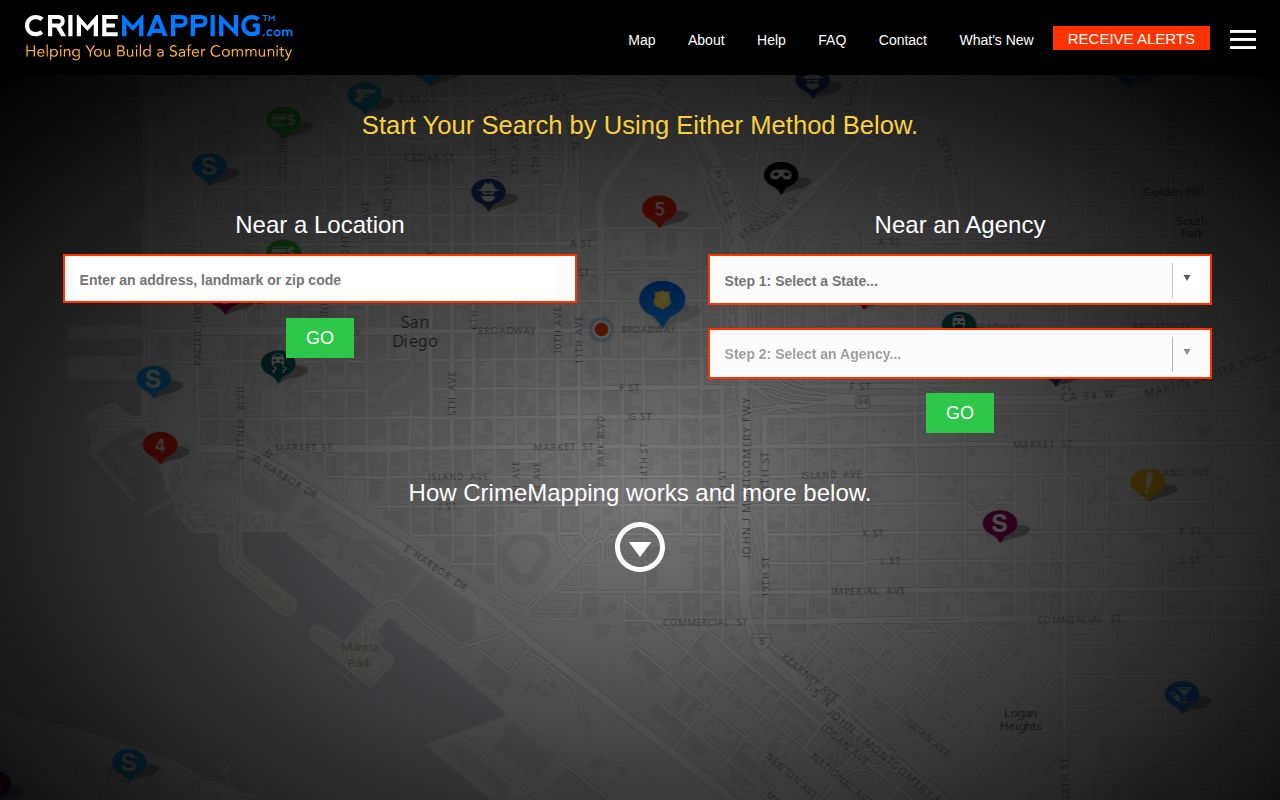
Location-based activity on the map is not a roster of arrested people. Municipal boundaries decide who holds the record. Anaheim Police publishes a rolling arrest log. Santa Ana Police has posted 30-day arrest-report PDFs. Irvine Police lists no daily arrest log, so questions there route through IPD Records and the county custody system.
Orange County Portal Data Quirks
The Public Services Portal asks you to sign in or create an account. That happens right at the opening screen. OCSD says its current version shows no inmate charges. The separate locator updates continuously. Even so, it may lag behind real-time status. A missing name or missing charge never proves an arrest record is absent. Released people drop off the current roster fast. They can stay inside the 30-day arrest-log window for weeks. A cited person may appear in the log without ever touching the roster. Juvenile, sealed, confidential, and safety-sensitive records may be withheld. Spelling or identity mismatches break searches too. The OCSD Inmate Information System notice documents the portal change.
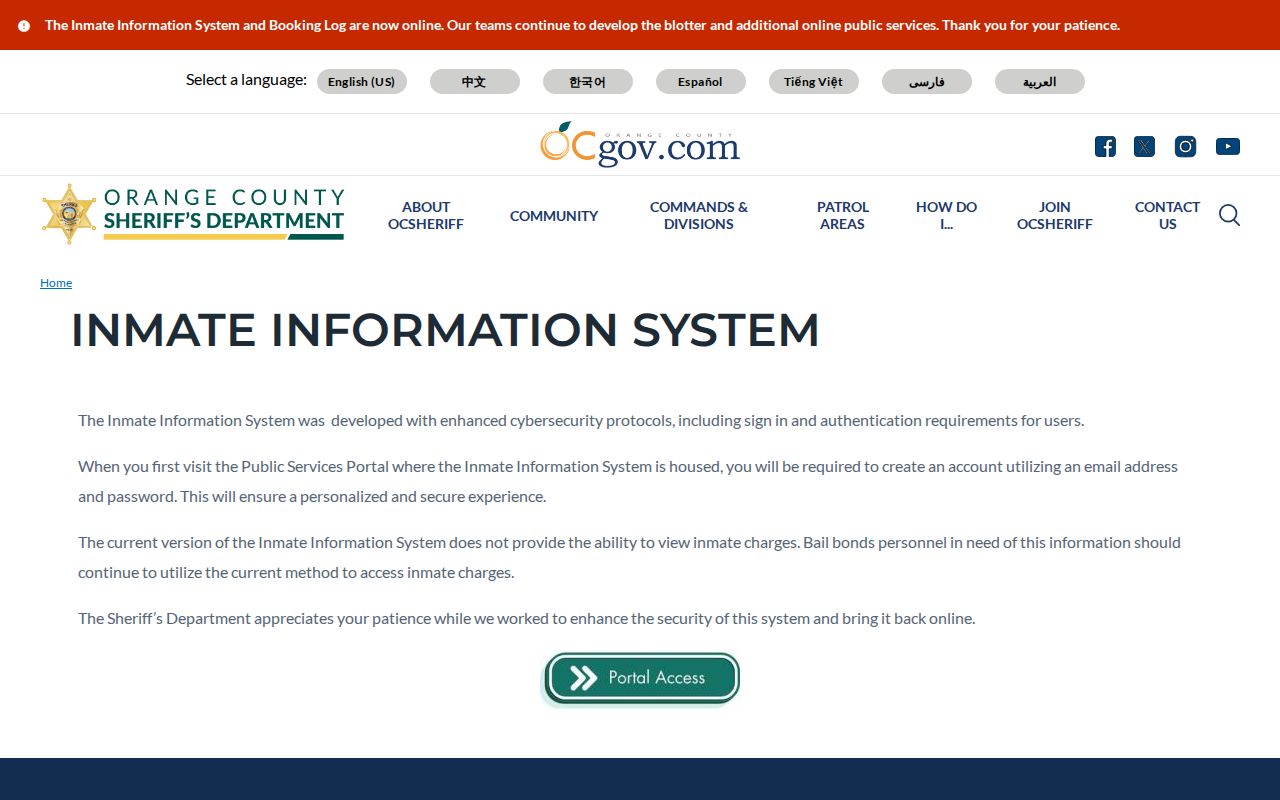
The sheriff's policy page covers its portal limits. It confirms the login requirement. It also confirms which charges get displayed. No booking subject appears there.
Older Orange County Arrest Records
Once 30 days pass, start with OCSD Information Management or the police department that made the arrest. Ask for exactly what you need. That might mean the arrest report, a booking sheet, a booking photograph, charge or hold information, or release details. Then supply the full name, date of birth if known, agency, date range, booking number, and facility. Expect redactions on exempt portions.
OCSD policy says inmate information may stay online for 30 days after release. That is an availability clue, not a destruction schedule. Older court outcomes have a separate path. Orange Superior Court offers case access or a copy request. Age alone does not mean erasure. The California State Archives guide describes historical jail registers and photographic files as categories, though it does not prove a specific Orange County series survives or is digitized.
Note: Save the source URL and capture date before requesting an older record, because rolling pages and search indexes can change.
News Is Not an Arrest Log
Start with official records. News stories should come second. For Orange County context beyond raw booking data, three outlets help. The Crime Voice’s Orange County archive, Voice of OC, and Patch offer useful coverage. Crime Voice reports on arrests in Anaheim, Irvine, Santa Ana, and other cities. One caveat. Some posts rely on agency photos, evidence images, or stock pictures rather than booking photos. Editors pick which arrests make the news. None of these outlets functions as a complete Orange County arrest log.
Third-party arrest lists carry their own risks. Local Crime News has an Orange County page. Entries there can be outdated, thin, or tied to the wrong county entirely. Some records even tagged the arrest as happening in a different area than the one named. Before treating any person-level detail as fact, confirm it. Check with the arresting agency or the court handling the case. Treat the county news archive as background reading only. It is not a substitute for an official roster of recent arrests.
Request Orange County Arrest Reports
When an entry falls outside the public date selector, a formal records request becomes the main route to an Orange County arrest report. The Orange County Sheriff's Department handles these requests through Information Management under the California Public Records Act. An older guideline lists email, mail, and walk-up counter options. The current online form asks for incident details and may deliver records electronically. Where instructions conflict, follow whatever contact information OCSD currently posts.
Narrow the request. That speeds everything up. Include the full name. Add the date of birth if known, the arresting agency, the approximate date and time, the location, the booking number, and the facility. Say which items you want. That might be the arrest report itself, the booking sheet, charge or hold details, release data, or a booking photograph. If part of the record must be withheld, ask for the non-exempt portions.
Government Code section 7922.535 sets the response rule. A response is not a promise of production. The agency can ask for clarification, release what it can, or cite an exemption. Juvenile files, sealed records, victim information, investigative material, and medical details may all be restricted. An older OCSD guide listed fifteen cents per page. Confirm current fees with Records before budgeting.
Orange County Reports Need Context
An Orange County arrest report is just one paper in a stack. Follow a named case to Orange County Superior Court for hearings and the final outcome. Online court data is not the official file. Request a certified copy when you need the authoritative version.
Each record preserves a different slice of the event. A roster shows who is in county custody now. A daily log keeps a date-based booking entry within its rolling window. A map marks reported activity by place. A police report adds detail when disclosure rules permit. The filed charges and the result live only in the court file. Keeping these sources straight keeps a stale or partial entry from saying more than it should.